



Are you gearing up for the ACCA BT (Business and Technology) exam? You’re in the right place! This video blog is designed to help you understand the key concepts, frameworks, and strategies you need to master this foundational paper in the Applied Knowledge level.
ACCA BT is more than just theory; it’s about understanding how businesses operate, the role of technology, and how accountants contribute to the wider organisational framework. In this video, we’ll break down the syllabus into manageable sections, share actionable tips, and guide you on how to tackle common challenges in the exam.
Don’t miss out on the valuable insights below the video—our article expands on these tips, offering deeper explanations and resources to ensure you’re fully prepared for your ACCA BT success. Watch the video, and let’s get started!
At this level, there are three papers and the first two relate to different types of accounting: financial accounting and management accounting.
MA tends to focus on forward-thinking and predicting how value can be made for shareholders whilst reporting and record keeping remains to be the focus of financial accounting.
FA covers financial reporting and record keeping and management accounting covers internal decision making.
BT looks at business strategy and the all-pervasive and underlying technology that currently affects business performance.
Overall, the ACCA qualification is not just about being an accountant, it’s about being a business leader too! You will soon find out that a good accountant not only needs to understand what makes a business run successfully, but ultimately understand what decisions are being made about the business in the boardroom.
This paper introduces you to businesses, how they work, why they are set up and what they are trying to achieve. It provides context for accounting and financial departments, detailing the roles the departments play in order to help the business meet its overall objectives.
A big part of the ACCA BT syllabus is how organisations are structured. For example, what departments do they decide to have and how do they structure those departments? Who will report to who throughout the organisation? Each department has its purpose in a business and there are different ways in which they each interact.
Organisations each have their own objectives and each department has a vital part to play in meeting these objectives to make a business successful. For now, we are looking at the financial department. What is its role and how does it interact with other departments? This paper looks at its role in financial reporting and recording overall business performance, and how it provides assurance to managers (when properly prepared). Also, how control and compliance work within the finance department by ensuring that the organisation – most particularly its finances, are executed in a controlled manner to make sure transactions are appropriately authorised, e.g.: by making sure that applicable laws and regulations are met.
This is a theme that will run through the whole qualification and ultimately, when you succeed at this level, you will find that you are also a well-rounded business leader and advisor.

The ACCA BT Exam is computer-based, lasts two hours, and has a passing mark of 50%. Overall, it’s an objective test and if you are not too sure what that means, we will cover that shortly in this article. You can also check ACCA pass rates here.
Firstly, there are two sections of the exam.
Section A, which is three quarters of the exam and holds around 76 marks out of the 100. They are all independent, standalone questions. 16 questions in this section are worth 1 mark each and 30 of them are worth 2 marks each. Within this section, all questions are varied. Sometimes, you’ll be given a small scenario. It might just be a sentence or a small paragraph at most.
Now, let’s have a look at what we mean by objective tests as opposed to multiple choice. This doesn’t mean objective tests can’t include multiple-choice, because they can!
The objective test includes: selecting a correct answer out of a few (e.g. between A, B, C or D), classifying items in a list, selecting two or more answers in a multiple-choice question and also confirming whether statements are true or false.
Section B contains multi-task questions and it is for the remaining 24 marks.
In this section, there are six small scenarios followed by two two-mark questions; 4 marks for each scenario, broken down into two questions with a similar style to the objective test in section A. There is another type of question that could come up in section B; picking items from a drop-down list; for example, filling in a gap by selecting a correct answer.
Get started with BT Qs practice
Choose your path to success with ACCA BT.
Try our free package or upgrade to a premium plan for expert support and resources.


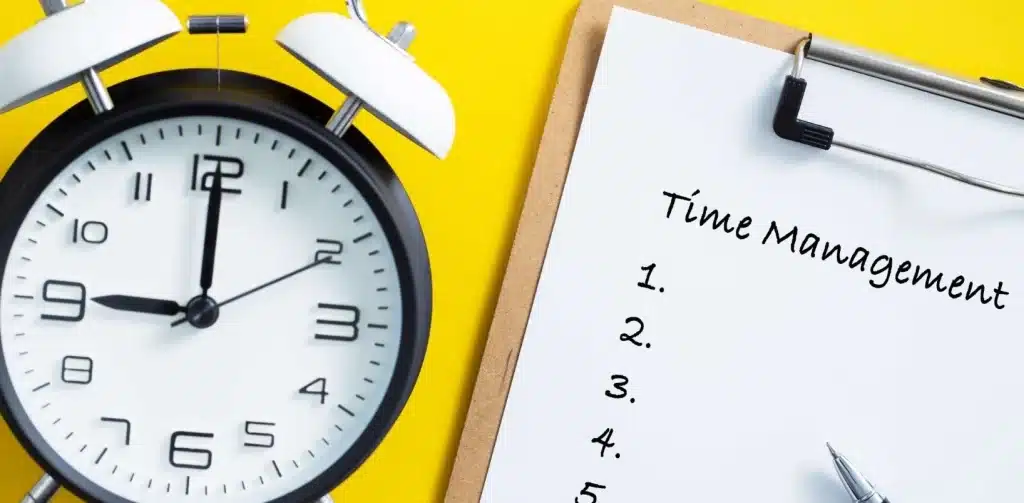
Time management is so important when sitting these exams. Although you have two hours to get through it, the clock can feel like its ticking very quickly!
A good thing to consider is to think about spending 1.2 minutes per mark in the exam (120 minutes for a 100-mark exam – so 1.2 minutes per mark). That’s allowing an hour and a half for section A and the final half hour for section B.
For section A, keep an eye on the clock and perhaps aim to get 15 questions done roughly every 30 minutes, to ensure effective time allocation.
For section B, try to aim for five minutes per multi-task question.
Now, things to look out for can be known as common traps in an exam, for example; negatively worded questions that may say ‘which of the following are NOT applicable’. Sometimes you can read through a list and be tempted to select the ones that are applicable. So, always keep an eye out for negatively worded questions and make a note of the number of options to choose from.
It says ‘which two of the following four are true’, whatever you do, make sure you pick two – no more or no less, because if you pick one or three (for example), you will get the whole question wrong!
Always pay careful attention to wording.
Sometimes the wording can be tricky and many people have said that they think, at times, it is potentially designed to catch students out. Make sure you take a little bit of time to slow down and read the questions carefully, trying to fully grasp them. Don’t immediately select an option just because it looks appealing if you don’t fully understand the question.
If you are struggling with this, there are some small tips that you can consider:
What we have experienced is that accountants tend to be very deadline driven, so if you don’t book your exam, then there isn’t a deadline to aim for. This can be discouraging for accounting students.
Perhaps aim to sit the exam two to three weeks after completing your course.
Booking the exam at the beginning, during a time when you are practising your questions (in a real-time exam format) with that date set in mind, can really keep you motivated and studying throughout! There are questions on Practice Tests Academy’s website that are very close to the format of the real exam and there are also some ACCA software tools that you can practise with via the ACCA website.
Make sure you practise all of your questions in a timed environment, especially towards the end of your study period!
Maximise Your Success with These Essential ACCA BT Exam Tips
Shorter study sessions are commonly more effective. Many people who give themselves 2 or 3 hours of studying in one large block find that they have wasted much of that time, for example, by tidying their desk, checking their emails, checking their text messages and so on. Those two hours can slip by very quickly and by the time they’ve finished studying, very little has actually been achieved.
Give yourself small goals of getting a particular number of questions studied, then you have an incentive that is easily workable and may be achieved in a small amount of time!
With output-based sessions, you know how much work you’re getting through each time, so you can plan out to get through the whole workload comfortably before sitting your exam.
Studying is not easy – we know that very well! It’s particularly difficult when working full-time or running a household at the same time!
Remember, the struggles that you are going through with studying, time-management and question comprehension won’t last forever… but the rewards will. They will last for the rest of your career.
So, keep at it and stay focused on your long-term goal!
Premium
Experience the real ACCA exam feel with our practice materials. Get familiar with the format, sharpen your skills, and boost your confidence.

Sign up for our weekly newsletter to receive expert guidance, study resources, career tips, the latest discounts, and more.

Sign up now for free materials and expert guidance to kickstart your ACCA BT journey with confidence!

